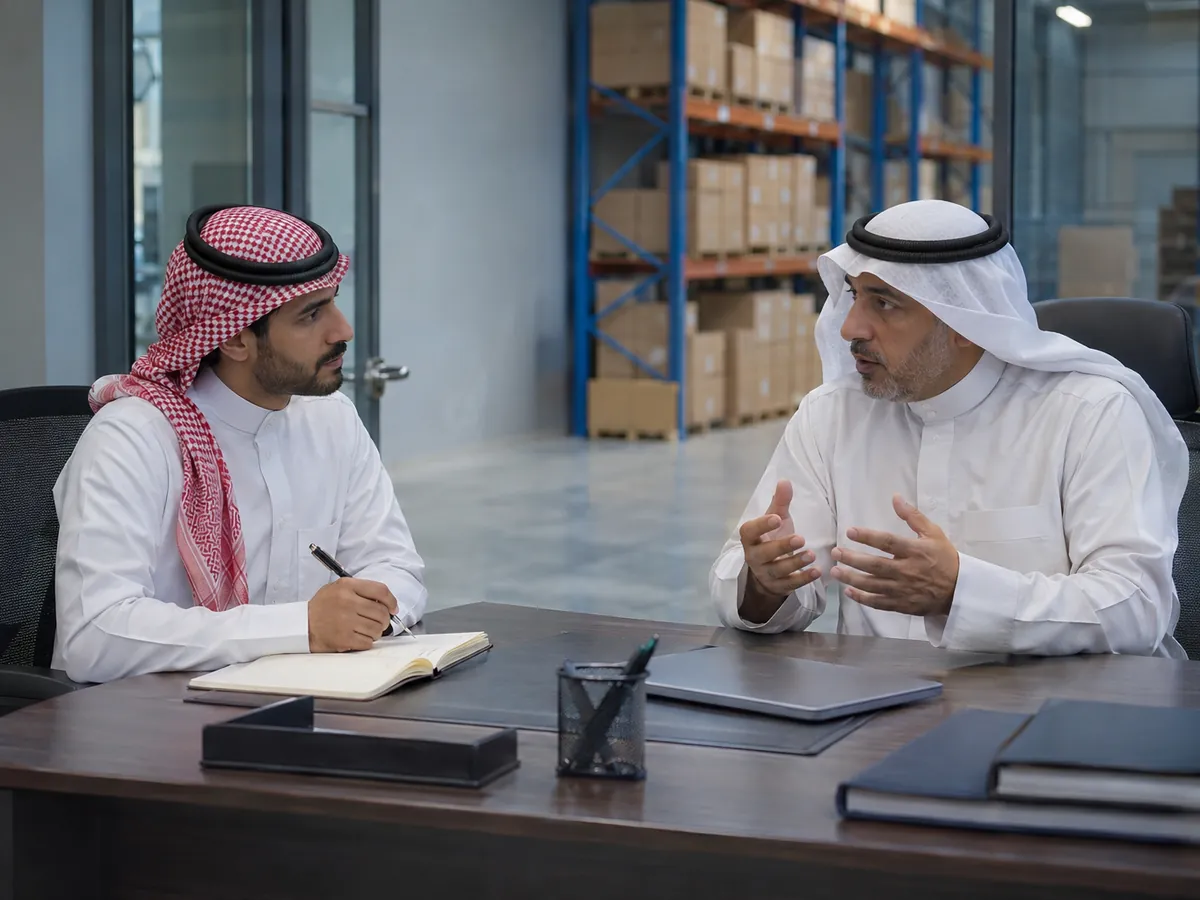
Why interviews carry more weight in Saudi deals
In markets with deep published data, interviews confirm what the numbers already show. In Saudi Arabia, a lot of what matters is not published: private company revenues, contract terms, how procurement teams score suppliers, and which distributors are switching brands. Interviews are often the only way to find out.
Language matters too. Many Saudi buyers and distributors speak more freely in Arabic, to someone who understands their business, than they would in an English survey.
Who we speak to
- Current customers, including the largest accounts and a spread of smaller ones so the picture is not skewed.
- Lapsed customers, on why they left, where they went and whether they would come back.
- Distributors and agents, often the best view of how the target sells and how it compares with rivals.
- Procurement teams at government-linked and large private buyers, where purchasing follows formal rules and local content scoring.
- Competitors and their customers, to test the target's claims about its position.
- Former staff and industry experts, on how the business runs and how the market is moving.
How the interviews run
- We agree the interview guide with you, so every question maps to a point in your investment case.
- On a confidential process, we do not name the target or our client to interviewees unless you agree.
- Interviews are mostly by phone or in person. We keep them short, because senior people give better answers in twenty minutes than in an hour.
- Notes are written up in English, with quotes translated and anonymised.
Personal data and the PDPL
Interview notes contain personal data, so the programme has to work within Saudi Arabia's Personal Data Protection Law. Transfers of personal data outside the Kingdom are governed by SDAIA's transfer regulation, issued in August 2024 [1], and SDAIA published draft amendments to the law's implementing regulations in October 2026 [2]. We collect only what the analysis needs, anonymise quotes, and agree with you how records are held.
What you receive
A short report with the main themes, a scorecard covering satisfaction, likelihood to stay, price sensitivity and plans to switch, anonymised quotes, and a view of which large accounts are at risk. Interview programmes can be bought on their own or as part of a full commercial due diligence.
Questions we're asked
Will the target know you are speaking to its customers?
Only if you want it to. On a confidential process we run blind interviews and do not name the target.
Can we listen in on some calls?
Yes, where the interviewee agrees. Some clients join two or three calls to hear the tone for themselves.
How many interviews do we need?
It depends on how concentrated the customer base is. We set the number on the scoping call, aiming to cover most of the revenue at risk.